


Blog
Truck Crash Statistics in California
Large-truck crash deaths in the U.S., California, Sacramento County and Placer County from 2024 federal data, plus the trucking rules that apply.
- Published
- November 12, 2026
- Reading time
- 7 min read
- Author
- Gingery Hammer & Associates, LLP
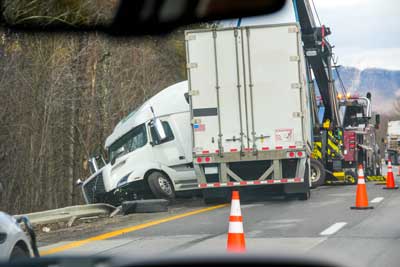
When a large truck is in a fatal crash, the people who die are most often not the people in the truck. In 2024, seven in ten were in other vehicles.
This page collects the latest federal numbers on large-truck crashes for the U.S., California, Sacramento County and Placer County, plus the federal and California rules that apply after a crash. Every number comes from a government source.
Key numbers
- In 2024, 5,340 people were killed in U.S. traffic crashes involving large trucks. That was a 2.5% decrease from 5,478 in 2023 (NHTSA).
- In 2024, 70% of those killed nationwide (3,753 people) were occupants of other vehicles. Another 17% (920) were in the large trucks, and 12% (667) were pedestrians, bicyclists and other people outside a vehicle.
- In 2024, NHTSA estimates that 161,201 people were injured in U.S. traffic crashes involving large trucks, a 5% increase from 2023.
- In 2024, 391 people were killed in California crashes involving a large truck, down from 462 in 2021.
- In 2024, 285 of California's 391 large-truck crash deaths were occupants of other vehicles and 68 were people outside a vehicle. Thirty-eight were truck occupants.
- In 2024, crashes involving a large truck killed 13 people in Sacramento County and 4 people in Placer County.
- In 2024, 4% of large-truck drivers in fatal crashes had a blood alcohol concentration of .08 or higher, compared with 25% of passenger car drivers.
National trend: who dies in large-truck crashes
In 2024, large trucks made up 9% of all vehicles in fatal crashes, 5% of registered vehicles and 10% of vehicle miles traveled. Nationwide, large trucks were involved in fatal crashes at a rate of 1.58 per 100 million miles they traveled in 2024, down from 1.77 in 2022.
The table starts in 2020 because NHTSA changed how it classifies vehicles that year. NHTSA says 2020 and later numbers are not comparable to 2019 and earlier.
| Year | Total killed | Large-truck occupants | Occupants of other vehicles | Nonoccupants |
|---|---|---|---|---|
| 2020 | 4,945 | 822 | 3,501 | 622 |
| 2021 | 5,821 | 1,011 | 4,176 | 634 |
| 2022 | 5,969 | 1,098 | 4,187 | 684 |
| 2023 | 5,478 | 962 | 3,843 | 673 |
| 2024 | 5,340 | 920 | 3,753 | 667 |
Nonoccupants are pedestrians, bicyclists and other people who were not inside a vehicle. The 2024 figures come from NHTSA's Annual Report File and can change when the final file is released.
California, Sacramento County and Placer County
NHTSA's state reports count every death in a crash that involved at least one large truck.
| Year | California | Sacramento County | Placer County |
|---|---|---|---|
| 2020 | 411 | 14 | 3 |
| 2021 | 462 | 14 | 6 |
| 2022 | 442 | 12 | 5 |
| 2023 | 395 | 11 | 3 |
| 2024 | 391 | 13 | 4 |
In 2024, Sacramento County's rate was 0.81 large-truck crash deaths per 100,000 residents. Placer County's rate was 0.92. County numbers are small, so they can rise or fall sharply from one year to the next.
In 2024, large trucks were 7.2% of the 5,390 vehicles in fatal crashes in California, compared with 9.3% nationwide. California's 386 large trucks in fatal crashes were 7.4% of the U.S. total.
These federal sources do not break large-truck deaths out by city, and the California Office of Traffic Safety rankings have no truck category. So this page has no truck numbers for Roseville or the City of Sacramento.
When and how fatal large-truck crashes happen
NHTSA's 2024 numbers show where and when fatal large-truck crashes happened:
- In 2024, 76% of fatal large-truck crashes happened on weekdays (6 a.m. Monday to 5:59 p.m. Friday).
- In 2024, 62% happened in the daytime and 38% at night (6 p.m. to 5:59 a.m.). On weekends, 64% happened at night.
- In 2024, 56% happened in rural areas, 25% on interstates and 5% in work zones.
- In 2024, 80% of large trucks in fatal crashes were in crashes with more than one vehicle, compared with 63% of passenger vehicles.
- In 2024 two-vehicle fatal crashes between a large truck and another vehicle, both vehicles were hit in the front in 30.7% of crashes. The rear of the truck was the first point of impact in 22.1%, and in 21.2% the other vehicle's front hit the truck's rear. The other vehicle was hit in the rear in 6.8%.
The FMCSA's most recent Large Truck and Bus Crash Facts edition covers 2022. It reports that in 2022, at least one driver-related factor was recorded for 33% of large-truck drivers in fatal crashes, compared with 54% of passenger vehicle drivers. "Speeding of Any Kind" was the most frequent driver-related factor for both. For large-truck drivers, the second most common was careless, inattentive or improper driving.
The same 2022 report found that 1,069 large-truck occupants in fatal crashes were not wearing a safety belt, and 482 of them (45%) were killed. Of the 5,417 belted truck occupants in fatal crashes, 423 (8%) were killed. In 2022, a truck tractor pulling a single semitrailer accounted for 54% of the large trucks in fatal crashes.
In 2024, NHTSA found that 19.3% of large-truck drivers in fatal crashes had a previously recorded crash within 5 years, 17.0% had a prior speeding conviction, and 7.2% had a previous license suspension or revocation.
Federal rules for truck drivers and carriers
The Federal Motor Carrier Safety Regulations apply to employers, drivers and commercial motor vehicles that carry property or passengers in interstate commerce (49 CFR § 390.3). Several of them matter after a crash.
- Hours of service. A property-carrying driver may not drive without first taking 10 consecutive hours off duty. The driver may drive a total of 11 hours, and may not drive after 14 consecutive hours from coming on duty (49 CFR § 395.3(a)).
- Breaks. Driving is not allowed once 8 hours of driving have passed without a consecutive 30-minute interruption, with exceptions for some short-haul drivers (49 CFR § 395.3(a)(3)(ii)).
- Weekly limits. A driver may not drive after 60 hours on duty in 7 consecutive days, or 70 hours in 8 consecutive days if the carrier runs trucks every day of the week. A period of 34 or more consecutive hours off duty can restart that count (49 CFR § 395.3(b) and (c)).
- Exceptions. A driver who meets adverse driving conditions may drive up to 2 extra hours to finish the run or reach a safe place (49 CFR § 395.1(b)(1)).
- Logs. Carriers must generally have drivers record their duty status with an electronic logging device, with listed exceptions such as trucks built before model year 2000. No driver or carrier may make a false report or tamper with the device (49 CFR § 395.8(a) and (e)).
- Record keeping. A carrier must keep drivers' duty-status records and supporting documents for at least 6 months, and must keep an accident register for 3 years after each accident (49 CFR §§ 395.8(k), 390.15(b)).
- Testing. After a crash involving a death, the employer must test each of its surviving drivers for alcohol and controlled substances as soon as practicable. Testing is also required after a crash in which an injured person immediately receives medical treatment away from the scene, or a disabled vehicle is towed away, if the truck driver is cited for a moving violation within 8 hours (alcohol) or 32 hours (drugs) (49 CFR § 382.303).
- Markings. A commercial motor vehicle covered by these rules must generally show the operating carrier's name and its USDOT number on both sides (49 CFR § 390.21).
What California law says
- Truck speed limit. No one may drive a truck or truck tractor with three or more axles, or one pulling another vehicle, faster than 55 miles per hour on a highway (Vehicle Code § 22406).
- Lane rules. Those trucks must use lanes designated for them where signs are posted. Otherwise they must use the right-hand lane or stay as close as practicable to the right edge. On a divided highway with four or more marked lanes in one direction, they may also use the lane just left of the right-hand lane. The rule does not apply while turning, entering or exiting a highway (Vehicle Code § 21655).
- Stopping at the scene. Any driver involved in a crash that injures or kills someone must stop immediately (Vehicle Code § 20001).
- Information and help. That driver must give their name, address, vehicle registration number and the owner's name and address, and must give reasonable help to anyone injured (Vehicle Code § 20003).
- DMV report. A driver involved in a crash with injury, death, or more than $1,000 in property damage to any one person must report it to the DMV within 10 days (Vehicle Code § 16000).
- Deadlines. A lawsuit for injury or death caused by someone else's wrongful act or neglect generally must be filed within two years (Code of Civil Procedure § 335.1). A claim against a public agency for injury or death generally must be presented within six months (Government Code § 911.2).
What to do after a truck crash
- Call 911 and get medical care. See a doctor even if you feel all right.
- If you were driving, stay at the scene and exchange the information Vehicle Code § 20003 requires.
- Photograph the truck, the trailer and the door markings. The carrier name and USDOT number usually identify the company operating the truck.
- Write down the names of witnesses and the officer who took the report.
- Report the crash to the DMV within 10 days when Vehicle Code § 16000 applies.
- Keep your medical records, bills and photos together. Federal rules require carriers to keep driver logs for at least 6 months, not indefinitely, so the timing of any records request can matter.
How the numbers are counted
A large truck, in NHTSA's data, is any medium or heavy truck with a gross vehicle weight rating over 10,000 pounds, excluding buses and motor homes. That includes commercial and non-commercial trucks, so the counts cover more than semis.
Deaths come from the Fatality Analysis Reporting System (FARS), a census of fatal crashes on public roads where someone dies within 30 days. The 2024 numbers come from the Annual Report File, which can change when it is finalized. For example, the 2023 large-truck death count rose from 5,472 to 5,478 in the final file. Injury numbers come from the Crash Report Sampling System and are estimates, not counts.
A death "in a crash involving a large truck" means at least one large truck was in the crash. It does not mean the truck driver was at fault. FMCSA notes that these data systems do not include data on crash causation or fault.
Data years: NHTSA figures are for 2024, the latest year published. FMCSA figures are for 2022, the latest edition of Large Truck and Bus Crash Facts. The legal rules were read on the official eCFR and California Legislative Information sites in November 2026.
Frequently Asked Questions
How many people die in truck crashes in the U.S. each year?
In 2024, 5,340 people were killed in U.S. traffic crashes involving large trucks, according to NHTSA. That was down 2.5% from 5,478 in 2023. The count includes everyone killed, not just people in the trucks.
How many truck crash deaths were there in California?
In 2024, 391 people were killed in California crashes involving a large truck. That was down from 462 in 2021. In 2024, 13 of those deaths were in Sacramento County and 4 were in Placer County.
Who is most likely to die in a large-truck crash?
In 2024, 70% of the people killed in U.S. large-truck crashes were occupants of other vehicles. Another 17% were in the trucks, and 12% were pedestrians, bicyclists or others outside a vehicle.
How many hours can a truck driver drive in a day?
Under federal rules, a property-carrying driver may drive up to 11 hours after 10 consecutive hours off duty, and may not drive after 14 hours from coming on duty (49 CFR § 395.3). A 30-minute break is required after 8 hours of driving, with some exceptions.
Are truck drivers tested for drugs and alcohol after a crash?
Yes: under 49 CFR § 382.303, after a crash involving a death, the employer must test each of its surviving drivers for alcohol and controlled substances as soon as practicable. Some injury and tow-away crashes also require testing when the truck driver is cited.
How long do I have to file a truck accident claim in California?
Usually two years from the injury, under Code of Civil Procedure § 335.1. If a public agency may be responsible, a written claim generally must be presented within six months (Government Code § 911.2).
Sources
- NHTSA, Traffic Safety Facts: Large Trucks, 2024 Data (DOT HS 813 816): national deaths and injuries, person type, crash timing and location, impact points, driver records, state tables
- NHTSA, State Traffic Safety Information (STSI) for California: deaths in crashes involving a large truck, statewide and by county, 2020-2024
- FMCSA, Large Truck and Bus Crash Facts 2022: driver-related factors, safety belt use, truck configurations, data limits
- 49 CFR § 390.3 (who the federal motor carrier safety rules apply to)
- 49 CFR § 395.3 (maximum driving time for property-carrying vehicles)
- 49 CFR § 395.1 (scope of the hours-of-service rules; adverse driving conditions)
- 49 CFR § 395.8 (record of duty status, electronic logging devices, record retention)
- 49 CFR § 382.303 (post-accident alcohol and drug testing)
- 49 CFR § 390.15 (accident register kept for 3 years)
- 49 CFR § 390.21 (carrier name and USDOT number on both sides of the truck)
- California Vehicle Code § 22406 (55 mph limit for trucks with three or more axles or towing)
- California Vehicle Code § 21655 (designated and right-hand lanes for trucks)
- California Vehicle Code § 20001 (duty to stop after a crash with injury or death)
- California Vehicle Code § 20003 (duty to give information and render aid)
- California Vehicle Code § 16000 (report to the DMV within 10 days)
- California Code of Civil Procedure § 335.1 (two-year deadline for injury and death claims)
- California Government Code § 911.2 (six months to present a claim against a public entity)
This article is general information, not legal advice. Every case depends on its own facts.
Related practice areas
- Roseville Truck Accident Attorney
- Sacramento Truck Accident Attorney
- Roseville Catastrophic Injury Lawyer
Our offices: Personal injury attorney in Roseville · Personal injury attorney in Sacramento · Download the free California Personal Injury Guide