


Blog
Why Premises Injuries Increase During Wet Roseville Winters
Winter rain in Roseville brings a familiar set of seasonal headaches: soggy shoes, puddles at doorways, and slippery surfaces almost everywhere.
- Published
- January 11, 2026
- Updated
- Reading time
- 5 min read
- Author
- Gingery Hammer & Associates, LLP
Winter rain in Roseville brings a familiar set of seasonal headaches: soggy shoes, puddles at doorways, and slippery surfaces almost everywhere. But while most people expect a little wetness, not everyone thinks about how dangerous certain places can become during the rainy season. Wet leaves often collect on cracked sidewalks, water runs into entryways, and broken pavement hides under shallow puddles.
When business owners or landlords do not handle these risks, someone passing through could easily get hurt. A premises liability lawyer can help people figure out their next steps if an injury happens because a property was not taken care of during wet or stormy conditions.
Why Wet Weather Raises the Risk of Premises Injuries
Once the rain starts, simple things like walking into a store or leaving a building become riskier. Surfaces that are normally safe get slick without warning.
- Rainwater often gets tracked indoors by foot traffic. Hard tile or polished flooring does not take much to become slippery.
- Puddles can hide problems like warped boards, uneven bricks, or cracks that cause people to trip.
- Blocked gutters and poor drainage make it worse. Water builds up in places it should not, sometimes freezing on cold nights or rushing down sloped walkways.
Even properties that look clean from a distance may have hidden problems in corners or paths that are not dried or maintained well.
Gingery Hammer & Associates, LLP notes that wet or poorly maintained walkways, such as slippery tiles or unaddressed leaks, are a common source of preventable falls.
What Makes Property Owners Responsible for Dangerous Conditions
Not every accident is someone's fault, but property owners do have a role to play. Under California law, a person who owns, leases, occupies or controls property must use reasonable care to keep it reasonably safe. That includes using reasonable care to find unsafe conditions and to repair them, protect against them, or give an adequate warning.
- Common examples are entryways, parking lots, staircases, and sidewalks that belong to a store or housing complex.
- While individuals may rent, it is often businesses or management companies who are expected to inspect and repair shared spaces.
- A big difference exists between natural wear (like fresh rain on a path) and danger caused over time by poor upkeep. For instance, a puddle is one thing, but a slippery surface from weeks of ignored drainage is another.
Notice matters too. An owner is usually responsible for a hazard it knew about, or one it should have found with reasonable care. A jury may look at how long the water or damage was there and whether the owner had time to clean it up, fix it or warn people. For stores and similar businesses, skipping reasonable inspections can suggest the problem was there long enough to be found.
The line between what counts as reasonable care and neglect matters, especially if someone ends up in the hospital afterward.
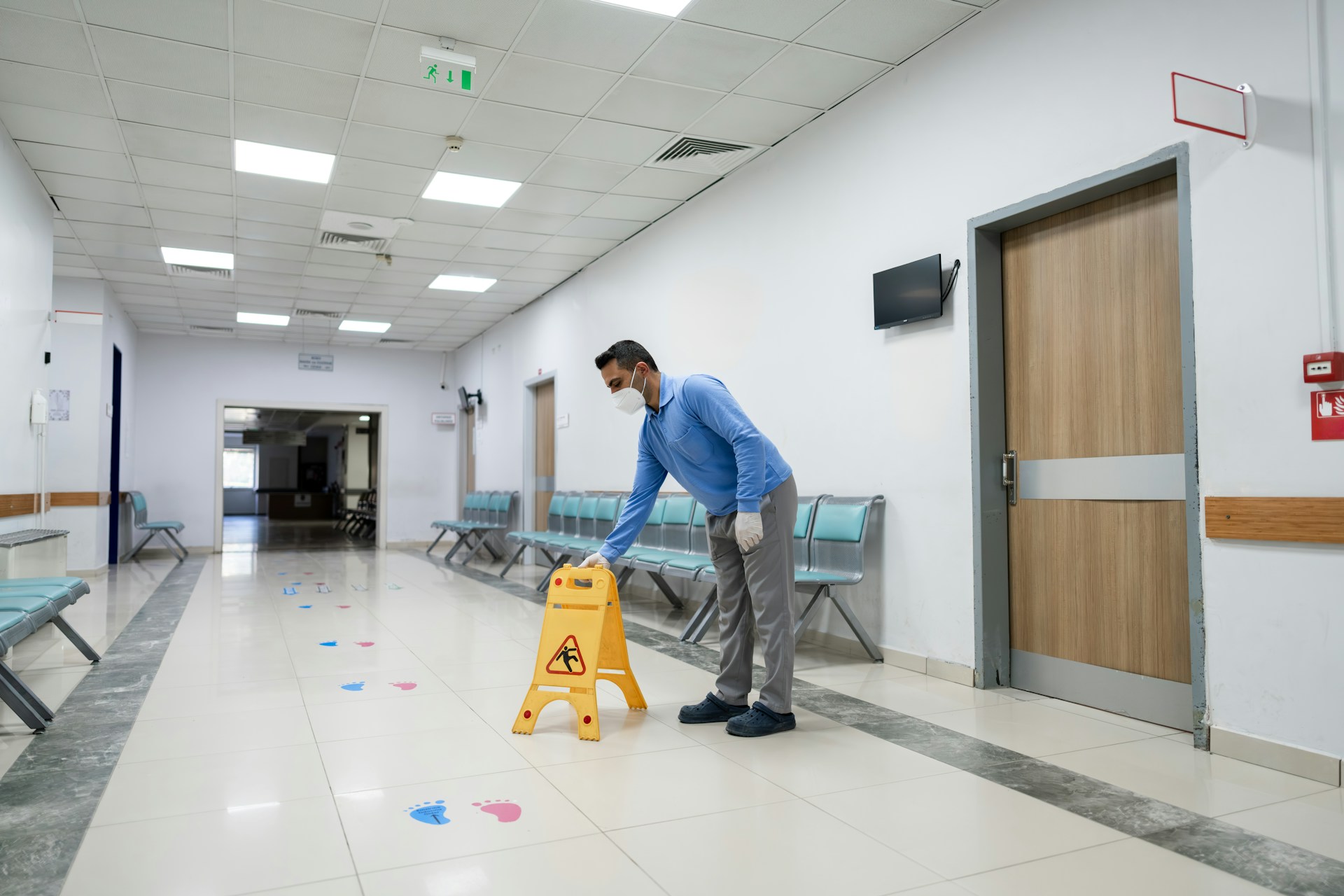
Does a Wet Floor Sign Change Anything?
A warning sign can matter, but it does not always end the question. If a hazard is so obvious that a person could reasonably be expected to see it, the owner does not have to warn about it. The owner may still have to take reasonable steps to protect people who have no real choice but to walk through it, like the only entrance to a building.
Your own care can matter as well. California uses comparative fault. If the person who fell was also careless, their damages can be reduced by their share of the responsibility. It does not automatically bar the claim.
Common Types of Injuries Seen During Wet Winters
When someone falls because of ignored hazards, the injuries can stick around long after the rain has dried. Some of the most common ones happen fast but take months to heal.
- Slips tend to happen near doors, where rainwater seeps in or rugs shift underfoot.
- Cracks in sidewalks are not always easy to spot when covered by puddles. It only takes one misstep to twist an ankle or land on a hard knee.
- Staircases become even more dangerous. A little water mixed with low lighting or loose handrails adds up to a bigger risk than people realize.
Rain makes these injuries more common, but it is often poor maintenance that makes them serious.
What Help from a Premises Liability Lawyer Could Look Like
When an injury does happen, it is hard to know what to do right away, especially if you are hurting or embarrassed. A premises liability lawyer helps walk people through what happens next and how those responsible might be held accountable.
- One of the first things we look at is evidence. That could include pictures of the accident area, security footage, or maintenance logs.
- Timing matters. Walkways dry, puddles vanish, and mats may be replaced quickly, so documenting the area right after the incident helps preserve the facts.
- After medical care is handled, questions often come up like: who owns the property, did anyone report the issue before, and was there a plan to fix it?
Deadlines matter as well. In California, most personal injury lawsuits must be filed within two years from the date of injury. If the fall happened on property owned by a city, county or other public agency, a written claim usually has to be presented to that agency within six months.
Having someone who understands what to look for can help sort through those details and bring clarity to a stressful time.
We offer legal guidance on premises liability claims after falls, providing experience with both residential and commercial property injury cases in Roseville.
Examples of Where These Accidents Often Happen in Roseville
Certain locations in Roseville are more prone to wet-weather injuries, just based on the amount of foot traffic or how the space is managed.
- Large shopping centers get busy during the rainy season, and busy entrances and crowded parking lots mean more tracked-in water.
- Public buildings and offices sometimes fail to use entrance mats the right way, letting water pool instead of soaking it up.
- Apartment complexes have shared staircases, sidewalks, and mail areas. All it takes is one poorly lit walkway or a railing in need of repair to cause trouble.
We have seen that even newer properties can have issues if regular care gets skipped during the winter months.
Staying Aware When the Sidewalks Shine
In Roseville, wet winters do not bring snow but they still bring plenty of hazards. A floor that was safe before the storm may not be safe ten minutes after someone walks through with wet shoes.
Knowing where most accidents happen during the rainy season helps people slow down and stay alert. When a fall does happen, figuring out whether poor maintenance played a part can be an important piece of finding solid ground again.
Frequently Asked Questions
Can I sue a store in California if I slip on a wet floor?
You may be able to, if the store was negligent in how it kept its property. You generally need to show the store knew or should have known about the water and did not clean it up, guard against it or warn about it in time, and that this caused your injury.
Is a property owner responsible for rain that just fell?
Not always. The question is whether the owner used reasonable care, and fresh rain the owner had no time to deal with is treated differently from a leak, a drainage problem or a puddle left for hours.
Does a wet floor sign protect the property owner?
It can help the owner, but it does not always end the case. A warning must be adequate, and even for an obvious hazard an owner may still need to take reasonable steps if people have to walk through it.
What if I was partly at fault for my fall?
You may still be able to recover. California uses comparative fault, so your damages can be reduced by your share of responsibility instead of being barred.
How long do I have to file a slip and fall claim in California?
Most personal injury lawsuits must be filed within two years from the date of injury. If a city, county or other public agency owns the property, a written claim usually must be presented within six months, so it helps to act early.
What should I do right after a fall in the rain?
Get medical care first, then document the scene if you can. Photos of the floor, mats, leaks or puddles, the names of witnesses, and a report to the manager can help, because wet areas dry and get cleaned up quickly.
Sources
- California Code of Civil Procedure § 335.1 (two-year deadline for personal injury lawsuits)
- California Courts Self-Help Guide, Statute of limitations (2 years from the date of injury; earlier claim deadline for government agencies)
- California Government Code § 911.2 (six months to present an injury claim to a public entity)
- California Civil Code § 1714(a) (duty of ordinary care in managing property; injured person's own carelessness)
- CACI Nos. 1000, 1001, 1003, 1004, 1011 and 405, Judicial Council of California Civil Jury Instructions, 2026 edition (premises liability elements, duty to discover and repair or warn, obvious conditions, constructive notice and inspections, comparative fault)
This article is general information, not legal advice. Every case depends on its own facts.
Related practice areas
- Roseville Premises Liability Attorney
- Roseville Slip and Fall Lawyer
- Roseville Weather-Related Accident Lawyer
Our offices: Personal injury attorney in Roseville · Personal injury attorney in Sacramento · Download the free California Personal Injury Guide