

Blog
Night Time Dangers for Pedestrians in Roseville
Walking through Roseville at night can be peaceful, especially during the cool December evenings when things quiet down after the holiday rush. But if you’re a pedestrian, the...
- Published
- December 21, 2025
- Updated
- Reading time
- 6 min read
- Author
- Gingery Hammer & Associates, LLP
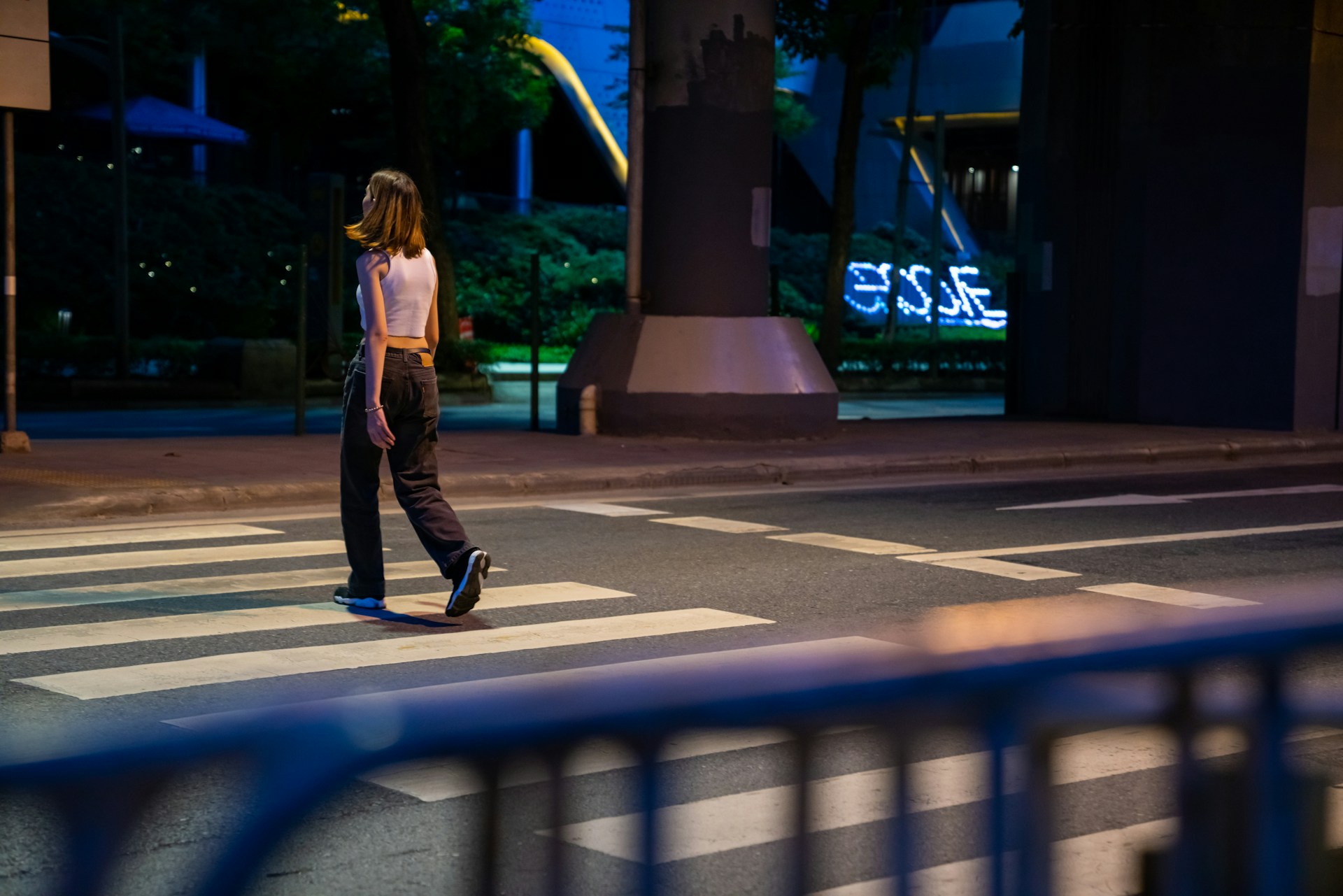
Walking through Roseville at night can be peaceful, especially on cool winter evenings when things quiet down. But if you’re a pedestrian, the risks of walking after dark go up. Low visibility combined with distracted drivers and dimly lit areas create extra dangers that people don’t always think about until it’s too late.
Pedestrian safety isn’t just about looking both ways. It’s about being prepared for the specific challenges that come with evening walks. Understanding what makes night time more dangerous helps you avoid common risks and make smarter choices while you’re out on foot.
Understanding Night Time Dangers For Pedestrians In Roseville
When the sun goes down, the risks facing pedestrians increase for a number of reasons. Vision becomes limited not just for those walking, but for drivers too. The California Driver Handbook warns that pedestrians, bicyclists, and motorcycles are much harder to see at night. Street lighting can vary a lot in residential spots or on less-traveled roads. Even familiar routes can feel totally different once it’s dark. You may not see uneven sidewalks, speeding cars, or other people until you’re already in a risky spot.
Another concern is that some drivers aren’t fully paying attention. Whether it’s because they’re tired, using their phone, or adjusting their GPS, their focus might not be on the road the way it should be. That lack of attention can become a serious problem when someone is crossing a street or walking near the edge of the road.
And people walking at night aren’t always visible, especially if they’re wearing dark clothes. Unlike cars, pedestrians don’t have headlights. That lack of visibility leaves someone far more vulnerable if a driver isn’t fully focused or if the lighting isn’t great.
California law treats darkness as a set window: from a half hour after sunset to a half hour before sunrise, plus any other time you can’t clearly see a person or vehicle 1,000 feet away. During those hours, drivers must have their headlights on.
Common Causes Of Night Time Pedestrian Accidents
Accidents rarely happen because of one single issue. More often, it’s a mix of problems that come together at the wrong moment. Some of the most common causes of pedestrian accidents at night in Roseville include:
Poor visibility: Darkness and dim lighting make it harder for drivers to spot people walking, especially if pedestrians aren’t wearing bright or reflective clothing.
Distracted driving: Phones, car infotainment systems, or even grabbing a snack can pull a driver’s eyes off the road for a few seconds, which is more than enough time to miss spotting someone in their path.
Crossing mid-block: Crossing streets outside of marked crosswalks or in unexpected places puts people right in the path of drivers who aren’t expecting them. Outside a crosswalk, California law says a pedestrian must yield to vehicles close enough to be an immediate hazard.
Speeding: Drivers going too fast might not have enough time to react to someone crossing the street or walking alongside the road.
Alcohol or drug use: This applies to both drivers and pedestrians. Impairment affects judgment, balance, and reaction times.
Take the example of someone walking home from a friend’s house two blocks away. The area isn’t too well lit, so they decide not to use the sidewalk and instead walk closer to the edge of the road. A driver coming around the corner doesn’t see them in time due to poor lighting and nearly swerves to avoid them. It’s a close call that could have ended badly.
Being aware of these risks doesn’t guarantee accidents won’t happen, but it does help people make safer decisions. The more we recognize these hazards, the better we can adjust our behavior, whether we’re the ones walking at night or the ones behind the wheel.
Safety Tips For Pedestrians Walking At Night
Walking at night doesn’t have to feel risky if you’re prepared. A few changes to your routine can go a long way in keeping you safer. Most accidents happen because people don’t expect trouble during something as simple as a walk. So think of these tips as ways to stay ahead of what could go wrong.
Here are some smart and easy habits for walking safely after dark in Roseville:
Wear light or reflective clothing. It might not be your first fashion choice, but being seen is more important than blending in with your surroundings. California’s Office of Traffic Safety recommends bright clothes and a flashlight when you walk at night.
Stick to sidewalks whenever they’re available. They give you more distance from cars and let drivers better predict where you’ll be. Where there is no sidewalk outside a business or residential district, California law generally says to walk close to the left edge of the road, facing traffic.
Use crosswalks and intersections even if it seems unnecessary. Mid-block crossings or darting between parked cars lower your chances of being seen in time.
Stay off your phone. Just like distracted driving leads to crashes, distracted walking does too. Heads-up walking is way safer than heads-down scrolling.
Choose well-lit routes, even if they take a little longer. Alleys, side streets, and unlit stretches might seem convenient, but they don’t give drivers enough time to react.
Think about the moments when you’re walking to grab something from a nearby store or returning from a get-together with friends. A flashlight app and a bright hoodie might not be your usual go-tos, but they can help you get home without incident. Taking those small actions makes a real difference.
How Drivers Can Improve Night Time Safety For Pedestrians
Walking safely at night isn’t just about what pedestrians do. Drivers also carry responsibility for seeing, slowing down, and giving space. While some areas in Roseville make driving at night feel routine, that ease can cause overconfidence or low awareness during moments when extra care matters.
Drivers can help keep pedestrians safe by doing the following:
Slow down in residential neighborhoods and near parks or schools. Even if you don’t see anyone right away, someone might emerge from between parked cars or step out from a darker area.
Keep your windshield and headlights clean. Fog, dirt, or glare from oncoming lights cuts down your chances of spotting movement along the road.
Use your high beams on dark streets when no one is coming toward you. The DMV recommends high beams on open country roads and dark city streets, and dimming them for oncoming drivers.
Put away distractions. Answer texts or look at directions only when parked. A few missed seconds could mean missing someone walking across a crosswalk.
Approach intersections and crosswalks with caution. California law requires drivers to yield to pedestrians in marked crosswalks and in unmarked crosswalks at intersections. Even if the light is green, someone could be finishing their walk across the street.
Be extra mindful if you’re driving late at night or early in the morning when your focus may not be at its best.
Sharing the road means paying attention to changes in lighting, movement, and road design. A driver might feel in control, but darkness brings in a new set of challenges that require slower, more careful actions.
Seeking Legal Help After A Pedestrian Accident
After an accident, most people are confused about what to do next. Pedestrian injuries can range from minor scrapes to serious conditions that need long-term care. That’s where legal guidance becomes important. Getting support from someone who understands California personal injury laws can help you understand your options and what steps to take.
Someone hurt in a pedestrian accident may find it difficult to deal with insurance forms, medical appointments, and financial pressure all at once. A pedestrian injury accident lawyer can step in to help handle the process. It becomes a lot easier to focus on healing and recovery when this part is taken off your plate.
Two legal points often come up after a night-time crash. First, a pedestrian who was partly at fault, for example by wearing dark clothes or crossing mid-block, may still recover. California reduces the damages by the pedestrian’s share of fault instead of barring the claim. Second, deadlines are short. Most injury claims must be filed within two years, and a claim against a city or other public agency generally must be presented within six months.
Legal professionals can guide you through timelines, work-related issues, damage documentation, and dealing with the other party’s insurance. If you’ve been involved in a pedestrian incident, especially after dark, it may be time to ask for some help and clarity on your next steps.
Frequently Asked Questions
When does California law consider it dark?
From a half hour after sunset to a half hour before sunrise, and any other time you can’t clearly see a person or vehicle 1,000 feet away. Drivers must use headlights during darkness and whenever rain or fog keeps their wipers running.
Where should I walk if there is no sidewalk?
Outside a business or residential district, California law says to walk close to the left edge of the road, facing traffic. You may use the right edge if there is no safe way to cross to the left side.
Is it illegal to cross mid-block at night?
Crossing outside a crosswalk is not always illegal, but you must yield to vehicles close enough to be an immediate hazard. Since January 1, 2023, officers may stop a pedestrian for it only when there is an immediate danger of a collision.
Can I recover if I was wearing dark clothes when I was hit?
You may. California uses comparative fault, so a pedestrian who was partly careless can still recover, with damages reduced by their share of the responsibility. Drivers must keep a lookout for pedestrians, even at night.
What should I do if I’m hit by a car while walking at night?
Call 911 and get medical care. A driver involved in an injury crash must stop, give their name, address, and vehicle registration, and help get the injured person to medical care if needed. If you can, photograph the scene and the lighting, and get witness names.
How long do I have to file a pedestrian injury claim in California?
Usually two years from the date of the injury, under Code of Civil Procedure § 335.1. If a city, county, or other public agency may be responsible, a written claim generally must be presented within six months.
Sources
- California Vehicle Code § 280 (darkness: a half hour after sunset to a half hour before sunrise, or visibility under 1,000 feet)
- California Vehicle Code § 24400 (headlights required during darkness and inclement weather)
- California Vehicle Code § 21950 (drivers yield to pedestrians in marked and unmarked crosswalks)
- California Vehicle Code § 21954 (pedestrians outside a crosswalk yield to vehicles that are an immediate hazard; officer stops limited since January 1, 2023)
- California Vehicle Code § 21956 (walking on the roadway: left edge, facing traffic, outside business or residence districts)
- California Vehicle Code § 20001 (driver in an injury crash must stop at the scene)
- California Vehicle Code § 20003 (driver must give name, address and registration, and render reasonable assistance to the injured)
- California Driver Handbook, Safe Driving (pedestrians are much harder to see at night; high beams on dark streets, dim for oncoming drivers)
- California Office of Traffic Safety, Pedestrian Safety (bright clothes and a flashlight at night)
- CACI Nos. 700 (drivers must keep a lookout for pedestrians) and 405 (comparative fault), Judicial Council of California Civil Jury Instructions, 2026 edition
- California Code of Civil Procedure § 335.1 (two-year deadline for injury claims)
- California Government Code § 911.2 (six months to present an injury claim against a public entity)
This article is general information, not legal advice. Every case depends on its own facts.
Related practice areas
- Roseville Pedestrian Accident Attorney
- Roseville Car Accident Attorney
- Roseville Personal Injury Attorney
Our offices: Personal injury attorney in Roseville · Personal injury attorney in Sacramento · Download the free California Personal Injury Guide